

Fashion and apparel marketing that counts the returns
For fashion brands, the hard part comes after the order: sizes, returns and COD. We scale on ROAS and on the margin left once returns are in.
Services
All servicesMore
IndustriesResultsHow we workPricingFree toolsAboutContactFor fashion brands, the hard part comes after the order: sizes, returns and COD. We scale on ROAS and on the margin left once returns are in.
Industry insight: Apparel RTO averages 25 to 40%; ethnic wear runs 30 to 45%.
This page was updated in October 2026 and reviewed by our senior marketing team. Sources: IMARC and Ken Research apparel market reports (2025); Base COD return rates by category (2026).
Size and fit returns run 20 to 30% in apparel. Platform ROAS never sees them.
Ad sets keep pushing sizes that are out of stock.
Two teams, two reports, one budget.
Most fashion brands we look at aren't losing money inside the ad account. They lose it a few weeks later, when a third of COD orders come back on size or colour. A campaign can look profitable in week two and be in the red by week six. So we start with fit notes, COD rules and repeat buying, and only then touch the bids.
Ad
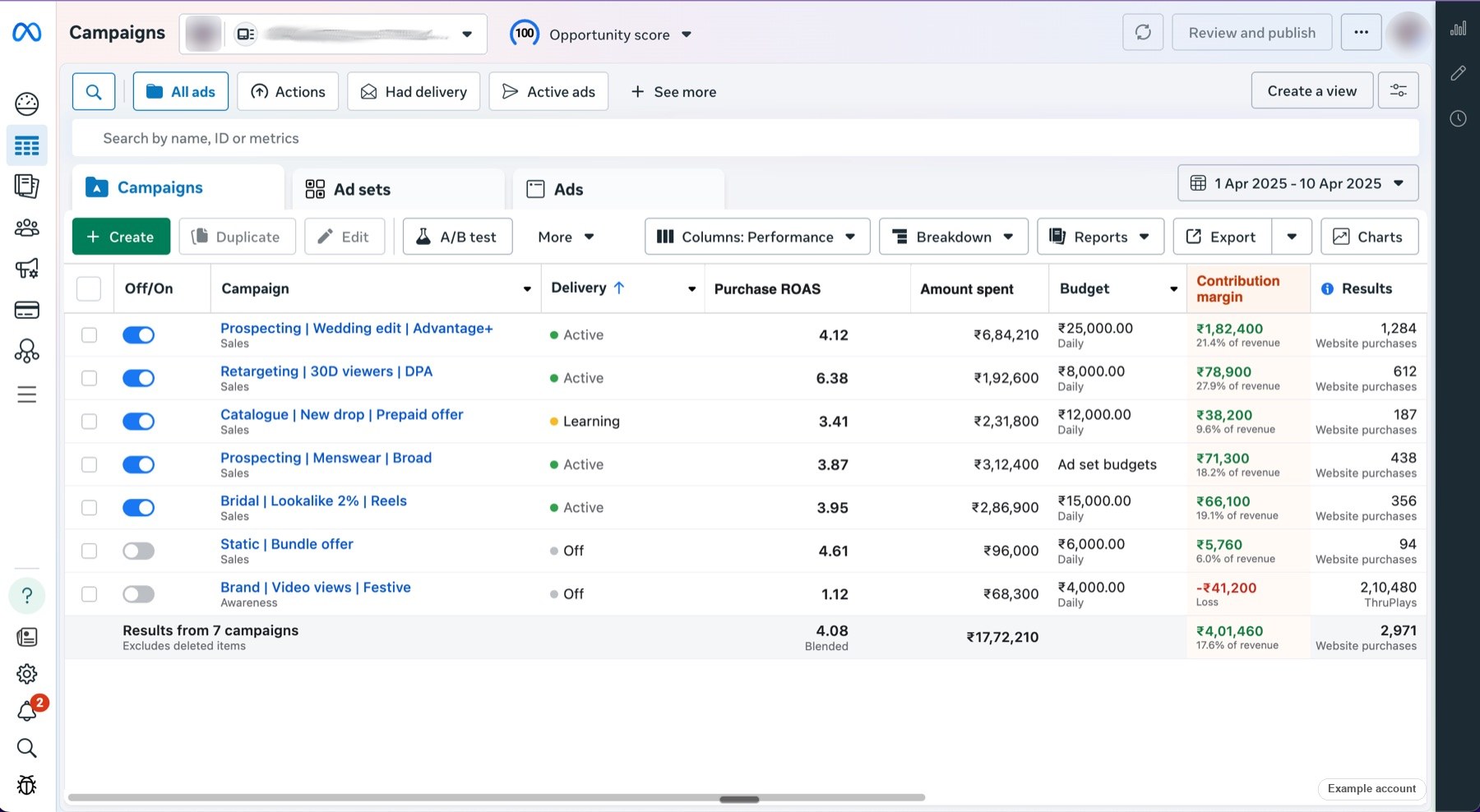
We report ROAS after returns for each campaign, so budget follows the orders people keep.
Fixed by tracking and measurementProduct page
We add fit notes and model measurements to the top 20 products and test them one at a time.
Fixed by website conversionDelivery
We confirm orders on WhatsApp before dispatch and offer prepaid incentives where RTO is highest.
Fixed by retention marketingRepeat
We send new drops to past buyers of that category first, before any paid push.
Fixed by retention marketing| Typical agency | In-house team | Your growth teamMobile First | |
|---|---|---|---|
| Who runs your account | A senior at the pitch, a junior after it | One person, usually strongest on one or two channels | A senior marketer with five ad accounts at most |
| What you see each week | Platform ROAS, CTR and spend | Whatever the ad dashboards show | ROAS next to contribution margin, by channel |
| In fashion and apparel | Report ROAS before returns, run Myntra separately | One person can't cover Meta and Myntra daily | Margin after returns, Myntra and website in one report |
Plan stock, creative and budget for fashion and apparel around these months.
Demand peaks during the end-of-season sales in January and July, at Diwali in October and November, and through the wedding season from November to February.
Meta drives discovery, with catalogue ads and creator videos for new collections.
Myntra brings category search and sale events, and we judge it on margin after commission.
Google Shopping and brand search reach shoppers who already know you.
Amazon sells basics and repeat styles, where shoppers compare prices.
Hooks we brief to fashion and apparel creators. Every claim is checked before it runs, and every video is scored on margin.
Angle 1
"I'm 5'3 and a size M. Here is how the kurta sits."
Angle 2
"Pure cotton, 140 GSM. Watch it after five washes."
Angle 3
"Three looks for a sangeet, under ₹3,000 each."
We check these in the free growth audit, and each one comes with the number we aim for.
A handful of products usually drive most returns. Fixing them lifts margin on every order.
What we aim forUnder 15% on prepaid orders
It shows which campaigns sell clothes that people keep.
What we aim forPositive on every scaled campaign
COD orders return at about twice the prepaid rate.
What we aim forPrepaid above 50% of orders
We grow from your product feed: Meta catalogue ads, Google Shopping and Performance Max, marketplace sponsored products, and carousels built from your product images.
What we need from you
Worked examples, built from patterns our team sees in each category. Client results are published only with each brand's written approval.
You get the answer here for free. The full breakdown comes after a short form.
Is my ROAS making money?
Full breakdown
Three fixes for your numbers
See the full breakdownThe numbers behind your answer and three fixes, also sent to your WhatsApp.
Alongside Meta and Google, in one report. We promote Style IDs with healthy size availability, cut bids on broken sizes, and plan EORS and Big Fashion Festival budgets weeks ahead. Myntra and website sales are compared on margin after commission and returns.
Size guidance on the top products, fit notes in ads, and margin tracked by size so spend moves away from sizes that keep coming back. Apparel RTO averages 25 to 40%, so this often matters more than the ad itself.
Yes. Teasers to warm audiences, a launch-day budget plan, creator try-on videos, and stock-aware pausing so ads stop when sizes sell out.
In most cases, a fashion brand needs both. Myntra brings category search and sale-event traffic; your website keeps the margin and the customer data. We compare them on margin after commission and returns in the same report, then shift budget each month.
We start with the products that drive most returns, add fit notes and real measurements, and test each change on conversion rate and return rate together. A size chart that cuts returns but kills orders is not a win.
Meta drives discovery, Myntra brings category search and sale events, Google Shopping catches people who already know you, and Amazon sells basics and repeat styles.
We confirm COD orders on WhatsApp before dispatch and offer prepaid incentives in the pin codes with the highest RTO.
Fashion sells most around the end-of-season sales in January and July, at Diwali, and through the wedding season from November to February.
Yes. Our creators make videos in English, Hindi and regional languages, including occasion and wedding edits.
We check return rate by size and product, margin after returns by campaign, and COD share by pin code.
Five questions, no email needed. You get an honest answer on screen.
Great fit
Book 30 minutes and we will read your accounts before the call.
Book a callGood fit
You keep the findings either way.
Book a callNot yet
Our free tools will show you where your money goes today. When you cross ₹5 lakh a month, come back and we will read your accounts. If you would like advice before then, we are happy to talk.
Tell us about your brand. We read your accounts before the call, so it is about your numbers.