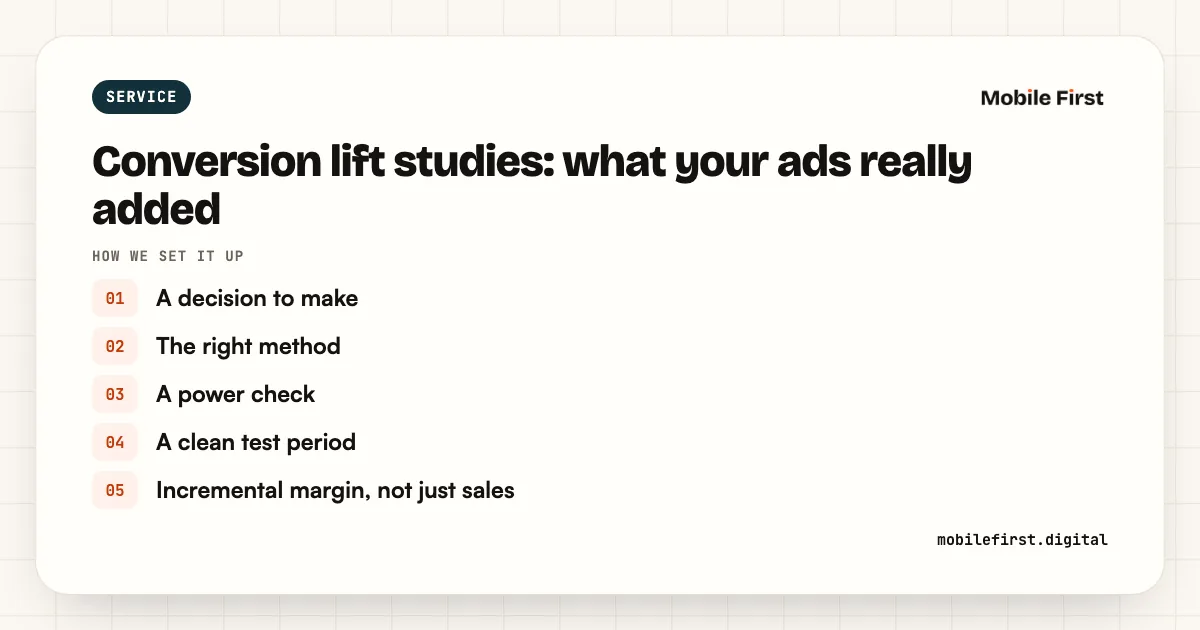
What is a conversion lift study?
A test where the ad platform randomly splits people into a group that can see your ads and a holdout group that cannot. The difference in purchases between the two is what your ads truly caused.
Why is incremental ROAS lower than platform ROAS?
Platform ROAS counts every attributed sale, including people who would have bought anyway. Incremental ROAS counts only the extra sales the ads created, so it is lower and more honest.
How much spend do we need?
You need enough for the platform to detect a difference, usually several lakh over two to four weeks. We size the study before you commit.
Can we estimate lift before running a study?
Yes. Our free incremental sales calculator shows how lift and incremental ROAS are worked out from a test group and a holdout group, so you can see what a study would tell you before committing spend.
Which platforms can run lift studies?
Meta and Google run conversion lift studies, and we can run geo tests where platform studies are not available.
How long does a study take?
Most studies run for two to four weeks, depending on spend and how quickly purchases build up.
What is a geo test?
Ads run in some regions and not in others, and the difference in sales shows what the ads added.
What do we do with the result?
We move budget towards channels and audiences with the highest incremental ROAS and cut spend that only takes credit.
Do we need a big budget?
You need enough for the platform to detect a difference. We size the study with you before you commit.
Should we test retargeting?
Yes. Retargeting and brand search are often the first places where ads take credit for sales that would have happened anyway.